Pectinase for Tea Extract Filtration & Clarification | TheaFlux
TheaFlux supplies pectinase for instant tea extraction plants to reduce viscosity, improve filtration, support clarity, and stabilize repeatable extraction windows.
Request pricing TheaFlux supplies pectinase for instant tea extraction plants to reduce viscosity, improve filtration, support clarity, and stabilize repeatable extraction windows.
Request pricingFor an instant tea extraction plant, pectin is not the main product — but it can become a main bottleneck. Plant-derived pectic material can raise extract viscosity, hold fine solids in suspension, slow filtration, increase fouling, and make bright liquor harder to repeat from batch to batch.
TheaFlux supplies pectinase solutions for tea extraction processing where managers need practical improvements in flow, separation, and finished extract appearance — without redesigning the extraction line.
As an enzyme supplier for tea extraction processing, we focus on plant-floor outcomes: faster separation, steadier filtration, cleaner clarification, reduced hold-ups, and extraction windows that operators can reproduce.
Pectinase is used as a processing aid where pectic substances from tea leaf material interfere with liquor handling after extraction. In the right process window, it helps break down pectin-related viscosity and supports cleaner separation of suspended fines.
Typical application points include:
The goal is not simply to add an enzyme. The goal is to create a controlled treatment step that helps the plant run with fewer surprises.
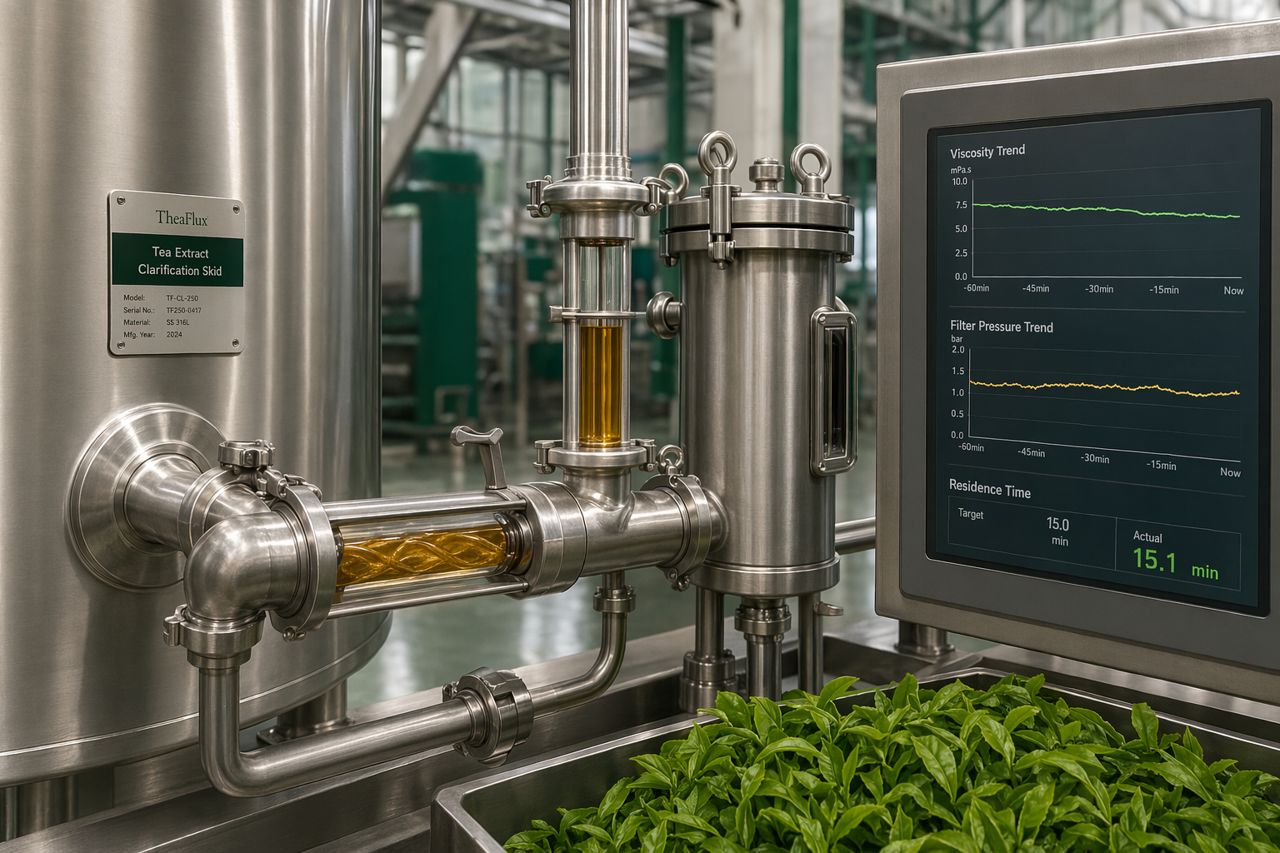
Pectic material can make tea extract move more slowly through transfer lines, tanks, filters, and membranes. Pectinase helps reduce pectin-related body so liquor flows more predictably through downstream equipment.
Buyer value:
When fine solids remain suspended in a viscous liquor, filters can blind early. Pectinase supports better liquor conditioning before filtration, helping reduce avoidable pressure build-up and throughput loss.
Buyer value:
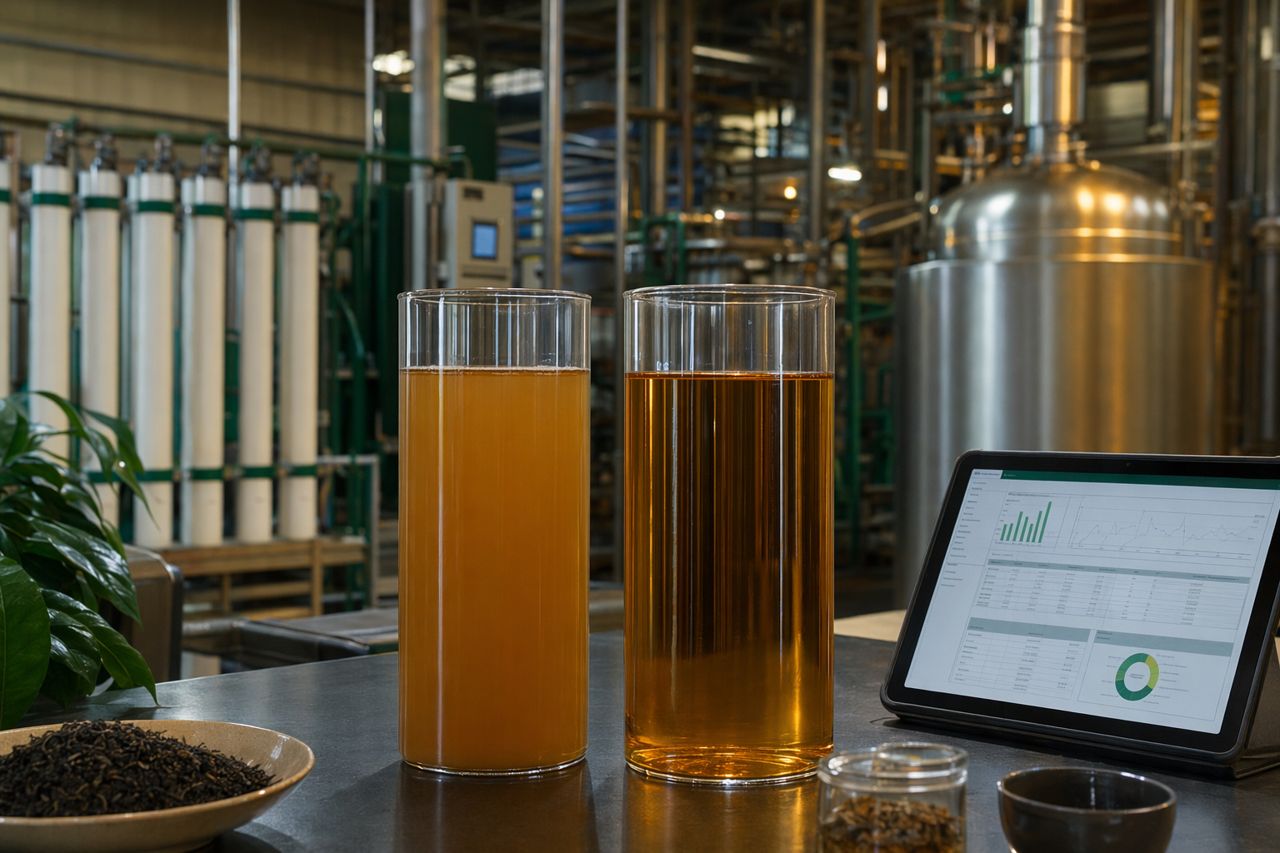
Instant tea quality depends on extract clarity and consistent appearance. Pectinase can help separate plant fines and pectin-associated haze precursors, supporting a brighter liquor before concentration or drying.
Buyer value:
Cold-water-soluble instant tea is sensitive to insoluble carryover and extract composition. Pectinase is often evaluated as part of a wider clarification strategy to reduce residues that can affect dispersion and cup appearance.
Buyer value:
Tea extraction is highly dependent on leaf type, cut size, extraction temperature, pH, solids level, residence time, and separation equipment. TheaFlux helps define the treatment window around your actual process, not a generic lab assumption.
We support decisions around:
A good pectinase trial should be evaluated against production metrics that matter to the extraction manager and quality team.
Recommended KPIs include:
TheaFlux can help structure a side-by-side trial so the plant can compare treated and untreated liquor under the same operating conditions.
Pectinase should fit into the rhythm of the extraction plant. TheaFlux products are selected for practical handling, controlled dispersion, and compatibility with industrial tea liquor treatment steps.
Implementation can often be evaluated with existing tanks, dosing points, and separation equipment. The key is to establish a repeatable window: correct addition point, enough contact time, stable mixing, and clear downstream measurement.
TheaFlux pectinase solutions are relevant for:
TheaFlux speaks in process terms. We do not sell pectinase as a magic fix. We help plants evaluate where pectin-related viscosity and haze are costing throughput, yield, or quality consistency — then match the enzyme approach to the actual bottleneck.
You get:
If your tea extract line is fighting viscosity, slow filtration, haze, or cold-water solubility variation, TheaFlux can help you evaluate pectinase as a controlled processing aid.
Use the on-site request a quote form and share your tea type, extraction conditions, current bottleneck, and target outcome. We will respond with a practical supply recommendation and trial pathway.
Tell us your application and volume — we reply with pricing and lead time.