Water quality is a process variable, not a utility
In an instant tea extraction plant, water is often treated as a supply-side issue until the liquor starts behaving differently. A familiar leaf grade can suddenly extract slower, carry more haze, darken faster, foul heat exchangers sooner, or miss cold-water solubility targets after concentration and drying.
The leaf did not always change. The water may have.
For extraction managers, water quality sits directly in the operating window between leaf chemistry, temperature, residence time, enzyme contact, separation, evaporation, and powder performance. Minerals and oxidants can shift liquor color, polyphenol behavior, protein interactions, pectin load, fine-particle separation, and storage stability.
TheaFlux works as an enzyme supplier for tea extraction processing with a practical view of this problem: enzymes can help widen the extraction window and improve liquor handling, but they perform best when water quality is controlled, documented, and linked to production outcomes.
Where water affects instant tea extraction
Water quality influences the process in several connected zones:
- Extraction yield: Mineral profile can affect how soluble solids move from tea leaf into liquor under fixed time and temperature.
- Color formation: Iron, manganese, alkalinity, and oxidants can accelerate darkening or drive dull, flat liquor color.
- Clarity and turbidity: Calcium, magnesium, proteins, polyphenols, and pectin-rich fractions can form haze or increase suspended load.
- Cold-water solubility: Mineral-driven complexes may remain invisible in hot liquor, then appear as haze, sediment, or poor dispersion in cold systems.
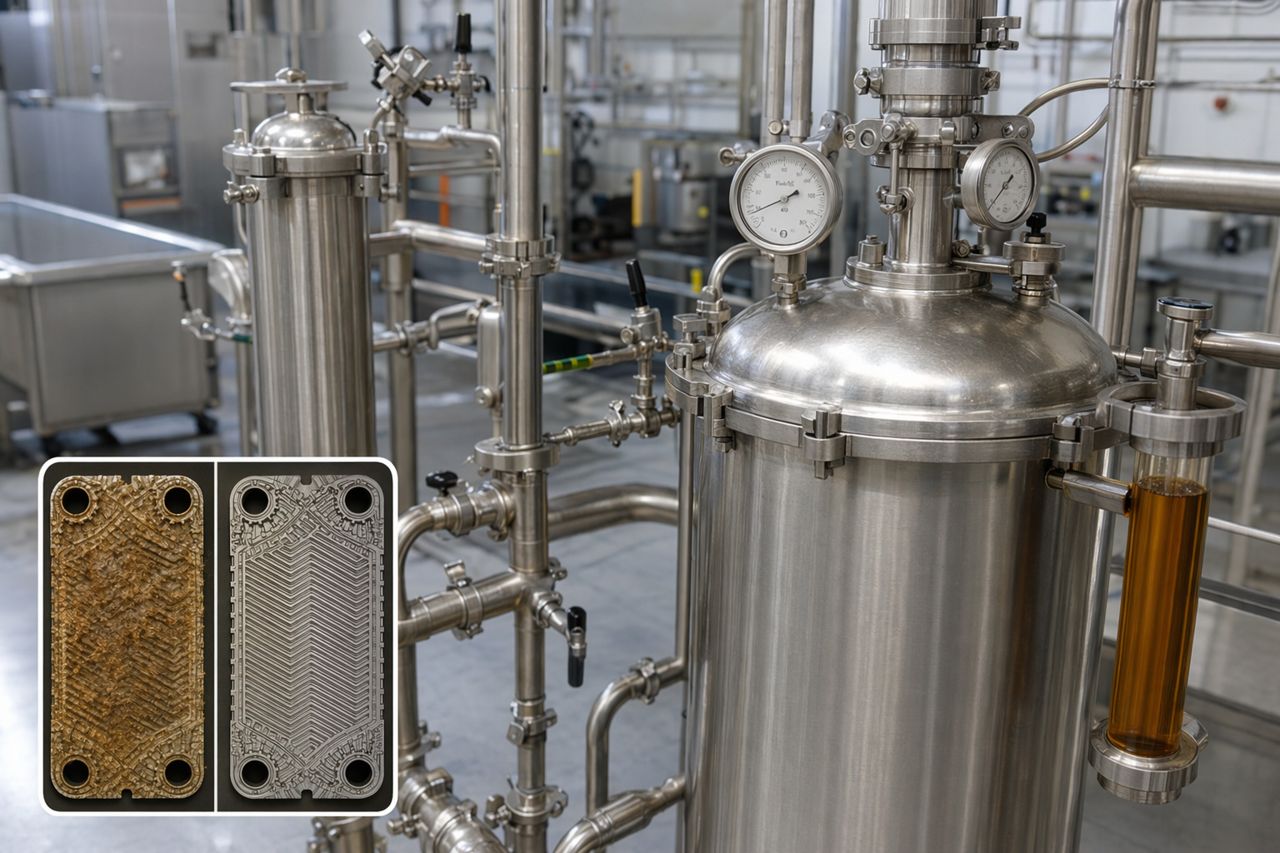
- Fouling behavior: Hardness, silica, tea fines, and colloidal load can increase deposit formation across extractors, screens, evaporators, and heat-transfer surfaces.
- Repeatability: Seasonal water variation can narrow the useful extraction window and make yesterday’s settings unreliable.
This is why water quality should be reviewed with the same discipline as leaf blend, extraction curve, enzyme dosing point, and separator performance.
Minerals and water factors that matter most
Hardness: calcium and magnesium
Hardness is one of the first checks when tea liquor becomes cloudy, deposits increase, or extract color loses brightness. Calcium and magnesium can interact with tea polyphenols and other macromolecules, increasing haze potential and making fines more difficult to separate cleanly.
In a plant environment, hardness can show up as:
- Higher turbidity after cooling
- More frequent screen blinding
- Reduced evaporator run length
- Scaling on heat-transfer surfaces
- More variation in cold-water solubility tests
Softening or blending strategies can help, but the target should not be a laboratory number alone. The practical target is a liquor that extracts predictably, separates cleanly, concentrates consistently, and reconstitutes without visible instability.
Alkalinity and pH buffering
Alkalinity affects how strongly water resists pH movement during extraction. Tea liquor chemistry is pH-sensitive, and even small shifts can change color tone, brightness, and polyphenol behavior.
High alkalinity can push liquor toward darker, less lively color and may increase the risk of instability downstream. Low buffering can make the process more sensitive to leaf variation, acid additions, or cleaning carryover.
For enzyme-aided extraction, pH control is especially important because enzyme performance depends on the actual process environment. The question is not only what the incoming water reads, but what the extraction liquor becomes after leaf contact, heat exposure, and residence time.
Iron and manganese
Trace metals can create outsized production effects. Iron and manganese may promote color darkening, discoloration, off-tone liquor, and oxidation-linked instability. In instant tea, these effects can become more visible after concentration, drying, storage, and reconstitution.
Warning signs include:
- Amber liquor turning brown or gray faster than expected
- Increased color drift between extraction and finished powder
- Batch-to-batch shade inconsistency despite stable leaf supply
- Sediment or haze appearing after cooling or storage
If iron or manganese varies seasonally, extraction teams may see unexplained shifts that appear to be leaf-related. A water trend log often reveals the pattern.
Chlorine, chloramine, and oxidants
Residual disinfectants protect water systems, but they can also interact with tea compounds. Chlorine or chloramine can contribute to oxidative changes, aroma loss, and color instability. Activated carbon or other dechlorination steps are commonly reviewed when liquor character appears harsh, flat, or inconsistent.
Control matters here because over-treatment and under-treatment both create risk. The plant needs enough water safety and system control without carrying reactive oxidants into the extraction zone.
Total dissolved solids and conductivity
Conductivity is a useful quick signal for dissolved mineral variation. It does not explain the whole chemistry, but it helps operators see when incoming water has shifted.
A conductivity change may correlate with:
- Altered extraction strength at the same residence time
- Increased fouling pressure
- Different separator load
- Concentration behavior changes in the evaporator
- Finished powder reconstitution variation
Conductivity is most useful when trended alongside hardness, alkalinity, pH, turbidity, and production results.
Silica and scale tendency
Silica is easy to overlook until deposits become difficult to remove. In hot extraction and evaporation systems, silica can contribute to hard, persistent fouling. When combined with tea solids and mineral scale, it may reduce heat transfer and shorten cleaning intervals.
For instant tea plants running tight production schedules, even modest run-length loss can create real cost through downtime, water use, cleaning chemistry, energy demand, and off-spec recovery.
Why water quality changes enzyme-aided extraction
Enzyme systems used in tea extraction are selected to support outcomes such as improved yield recovery, reduced viscosity, better separation, lower haze tendency, and more repeatable liquor handling. But enzymes operate inside the chemistry of the liquor.
Water quality can influence enzyme-aided processes by changing:
- The pH profile of the extraction stage
- The availability and behavior of soluble tea components
- The formation of haze-active complexes
- The load presented to separators and filters
- The downstream stability of concentrated extract
A stable water profile helps the enzyme program do the same job shift after shift. When water varies, the extraction team may compensate with temperature, residence time, dosage position, or clarification settings, but those adjustments should be based on evidence rather than guesswork.
Practical control points for extraction managers
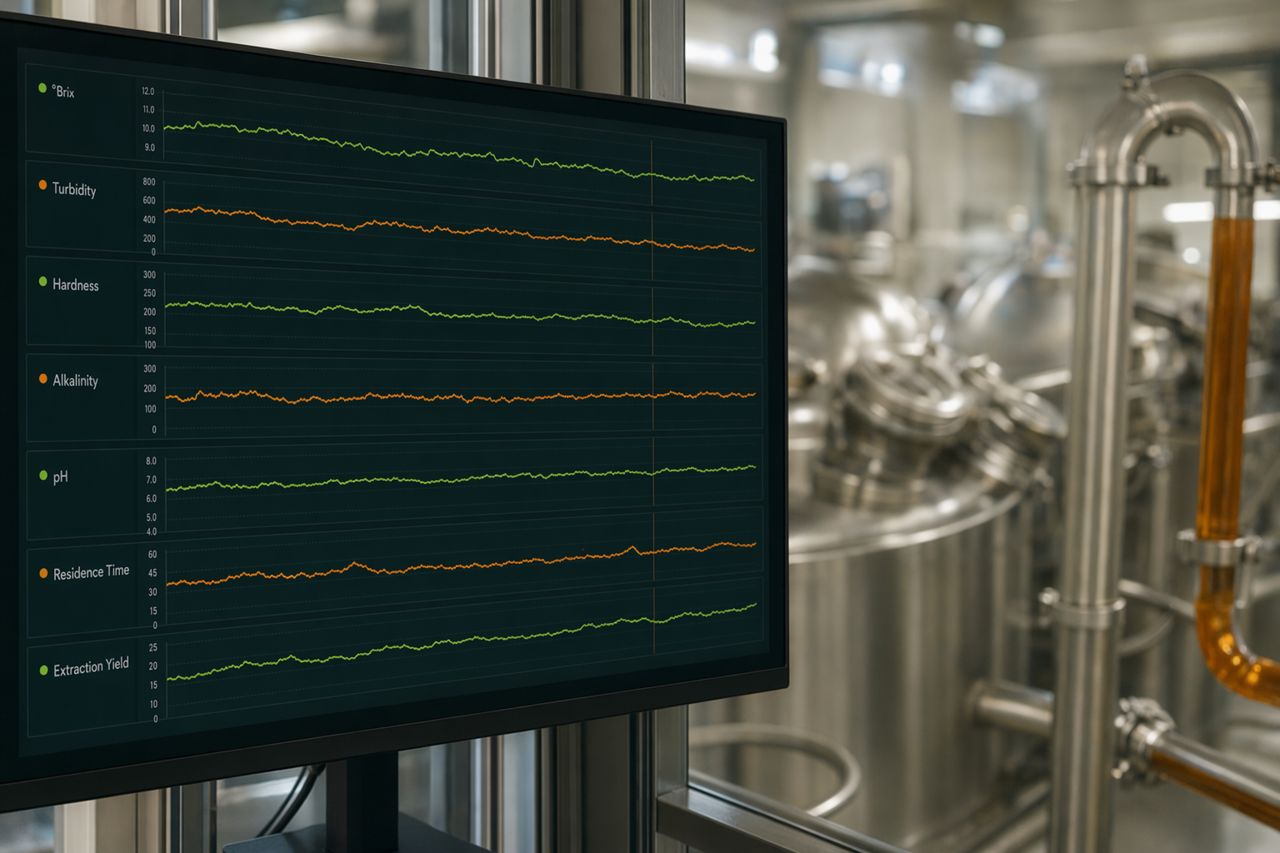
1. Build a water-to-liquor trend, not just a water report
Incoming water data is useful, but it becomes operational when connected to liquor behavior. Track water parameters alongside:
- Extraction yield
- °Brix at defined process points
- Turbidity after extraction and after cooling
- Separator differential pressure or flow stability
- Evaporator run length
- Finished powder solubility and sediment checks
- Color readings or approved visual standards
The goal is to find which water shifts actually move production outcomes.
2. Sample at the right plant locations
Municipal or well-water reports may not reflect what reaches the extractor. Sample water after relevant plant steps such as storage tanks, softeners, carbon beds, heat recovery loops, and final feed points.
If water sits in tanks or moves through mixed metallurgy, the extraction feed may carry a different mineral or metal profile than the source.
3. Watch the cold side
Many tea extracts look acceptable when hot. Instability often appears after cooling, concentration, drying, storage, or reconstitution. Cold-water solubility targets require attention to mineral-polyphenol behavior and haze formation under finished-use conditions.
A good extraction window should be judged by downstream performance, not only hot-liquor clarity.
4. Treat fouling as a chemistry signal
Fouling is not only a maintenance issue. It can signal changes in hardness, silica, tea fines, colloidal load, or incomplete separation. If cleaning frequency increases, review water quality and extraction chemistry together before increasing cleaning intensity.
5. Validate enzyme changes against water variation
When adjusting an enzyme program, avoid evaluating it during unstable water conditions unless that is the real operating challenge you need to solve. Strong validation compares liquor performance across typical water variation and defines practical control limits for the plant.
How TheaFlux supports water-aware tea extraction
TheaFlux helps instant tea processors align enzyme selection with real extraction conditions. That includes reviewing where water quality is affecting yield, clarity, viscosity, separation, fouling, color, and cold-water solubility.
Our approach is plant-floor practical:
- Map the current extraction window and pain points
- Identify water-quality variables most likely to affect liquor behavior
- Recommend enzyme fit based on process goals and constraints
- Support trial design with clear production checkpoints
- Help compare outcomes before and after process changes
For many plants, the improvement is not one dramatic lever. It is a more controlled extraction window: fewer surprises, cleaner separation, better liquor stability, and more predictable powder performance.
Request a quote
If water variation is affecting your instant tea extraction yield, clarity, color, fouling, or cold-water solubility, TheaFlux can help evaluate an enzyme approach for your process.
Request a quote through the on-site contact form