Tea Extract Haze: Root Causes Before Blaming the Clarifier
In an instant tea extraction plant, haze is rarely a single-equipment problem. The clarifier is where the problem becomes visible, but the root cause often begins upstream: leaf cut profile, extraction temperature, residence time, soluble solids loading, fines carryover, cooling rate, pH drift, or incomplete breakdown of haze-forming plant polymers.
For extraction managers, the cost is practical: lower usable yield, slower filtration, higher recycle, wider turbidity swings, fouled membranes, inconsistent cold-water solubility, and more rework before concentration or drying.
The question is not simply, “Do we need a stronger clarifier?” The better question is, “What is entering the clarifier that should have been controlled earlier?”
TheaFlux supports instant tea processors as an enzyme supplier for tea extraction processing with application-focused enzyme solutions designed to improve extractability, clarity, liquor flow, and repeatable extraction windows.
Why tea extract turns hazy
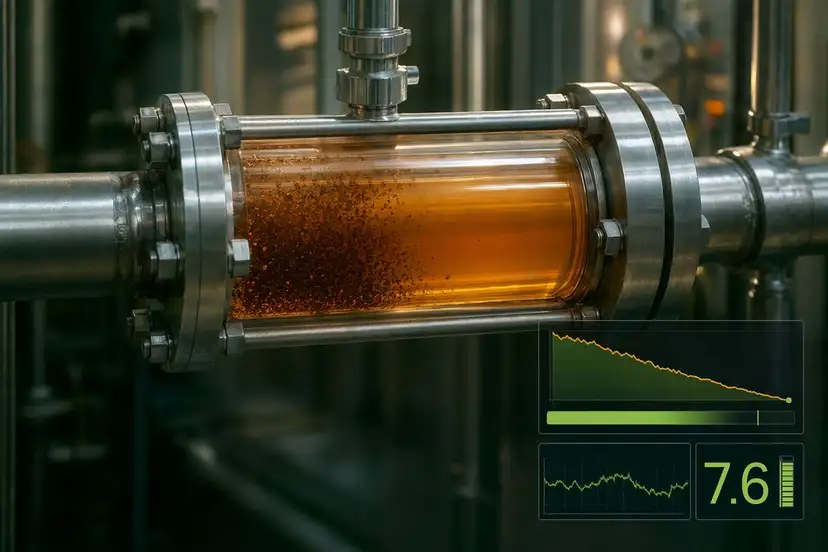
Tea extract is a complex liquor. It carries soluble tea solids, fine particles, colloids, polyphenols, proteins, polysaccharides, pectic material, and mineral interactions. Under the right conditions, these components remain dispersed. Under the wrong conditions, they aggregate, scatter light, and form visible haze.
Haze can show up as:
- Warm extract cloudiness after extraction
- Chill haze after cooling or dilution
- Turbidity spikes before evaporation
- Slow settling or unstable clarification
- Fine sediment in intermediate tanks
- Poor cold-water solubility in finished instant tea powder
- Filter blinding or centrifuge load increase
A clarifier can remove part of the load. It cannot correct an unstable extraction profile by itself.
Root cause 1: Leaf variability entering a fixed recipe
Tea leaf is not a uniform raw material. Region, season, grade, fermentation level, storage age, and cut size all influence extraction behavior.
Common plant-floor signs include:
- Same recipe, different liquor clarity
- Higher fines in one lot than another
- Faster turbidity rise during holding
- Longer clarification time after a raw material change
- Yield drop when operators reduce extraction severity to protect clarity
If the plant runs a fixed extraction recipe against variable leaf, haze risk moves up and down with the raw material. Enzyme treatment can help widen the process window, but it should be matched to the leaf stream and the actual bottleneck: extract release, viscosity, fines liberation, colloid stability, or filtration load.
Root cause 2: Extraction severity is releasing more than soluble tea value
Higher temperature, longer residence time, and aggressive agitation can improve extraction yield. They can also pull more haze-forming material into the liquor.
That tradeoff matters. A plant may gain soluble solids at the extractor but lose saleable output through recycle, turbidity correction, filter cleaning, or off-spec powder.
Watch for these indicators:
- Higher °Brix with worse turbidity
- Strong first-stage extraction followed by unstable downstream liquor
- Rising suspended load after residence time changes
- Clarifier torque or discharge volume increasing with extraction severity
- Evaporator or membrane fouling after pushing extraction harder
The target is not maximum extraction force. The target is controlled release: more desirable soluble tea solids with less downstream instability.
Root cause 3: Pectin and cell-wall materials are increasing liquor body
Tea leaf tissue contains cell-wall structures that can influence liquor viscosity, colloidal behavior, and separation performance. When these materials remain partially solubilized or fragmented, they can contribute to haze and slower clarification.
Operational symptoms may include:
- Extract that looks bright at high temperature but clouds during cooling
- Slower centrifuge response despite stable feed solids
- Membrane flux decline without a clear increase in visible fines
- Holding tank haze development over time
- Higher filtration pressure at the same flow target
A targeted enzyme approach can help modify selected plant polymers before they burden the clarifier. The best point of addition depends on plant layout, extraction staging, temperature profile, residence time, and downstream separation sequence.
Root cause 4: Protein-polyphenol interactions are being triggered downstream
Tea polyphenols are part of the product value, color, and taste profile. But under certain process conditions, interactions with proteins and other colloids can create haze, especially during cooling, concentration, dilution, or pH movement.
This is why a liquor may pass a hot clarity check and fail later.
Review the full path:
- Extraction temperature and hold time
- Solids loading into separation
- Cooling curve and thermal shocks
- pH and mineral contribution from water
- Concentration ratio
- Final dilution or cold-water solubility target
If haze appears after cooling, do not only adjust the clarifier. Check whether the extraction and enzyme window are preparing the liquor for downstream thermal movement.
Root cause 5: Fine particles are being created faster than they are removed
Some haze is truly particulate. Fine tea fragments can remain suspended, carry soluble color and flavor compounds, and overload clarification equipment.
Fines issues can be caused by:
- Leaf milling or handling damage
- High shear in extraction circulation
- Pump selection and transfer velocity
- Screen wear or poor pre-separation
- Aggressive tank agitation
- Rework loops that continue to break particles down
When fines dominate, enzyme treatment should not be expected to replace mechanical discipline. However, the right enzyme program may improve liquor release and help reduce the need for overly aggressive extraction conditions that generate additional fine load.
Root cause 6: Cooling and holding practices are destabilizing liquor
Tea extract can be stable in one thermal state and unstable in another. Rapid cooling, long warm holds, tank stratification, or inconsistent transfer timing can shift the balance between dissolved, colloidal, and suspended material.
Plant-floor checks:
- Compare turbidity before and after cooling
- Track hold time against haze formation
- Sample top, middle, and bottom of holding tanks
- Compare first-in and last-out liquor from the same batch
- Review whether enzyme contact time is consistent before heat inactivation or separation
Repeatability matters. A well-selected enzyme can only perform consistently when residence time, temperature exposure, and mixing are controlled.
How to diagnose haze before changing clarifier settings
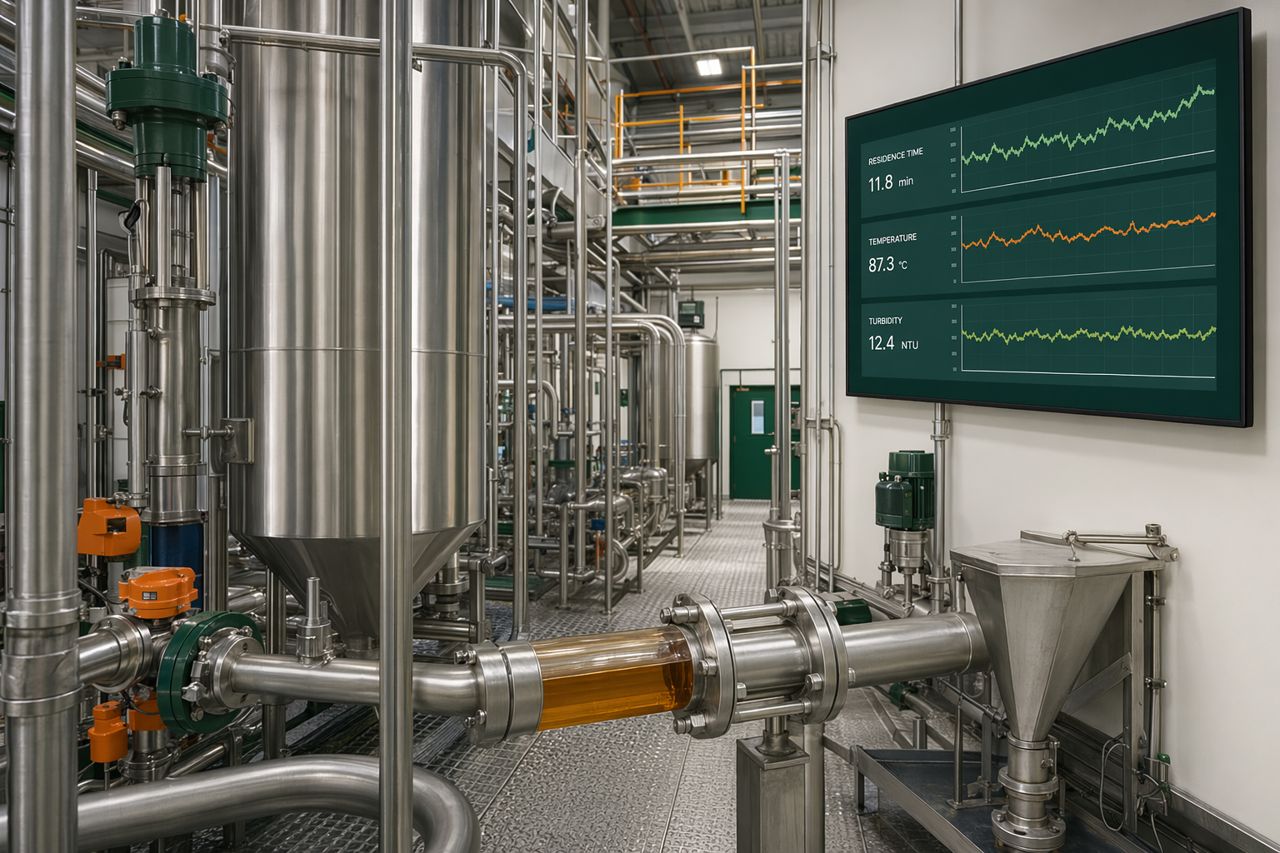
Use a short root-cause map before spending time on mechanical changes.
1. Locate the first appearance of haze
Sample at each stage:
- Extractor outlet
- Pre-screen or coarse separation
- Enzyme contact point, if used
- Clarifier feed
- Clarifier discharge
- Cooler outlet
- Concentrator feed
- Concentrate tank
- Final reconstituted powder solution
If haze begins before the clarifier, changing clarifier settings may only shift the symptom.
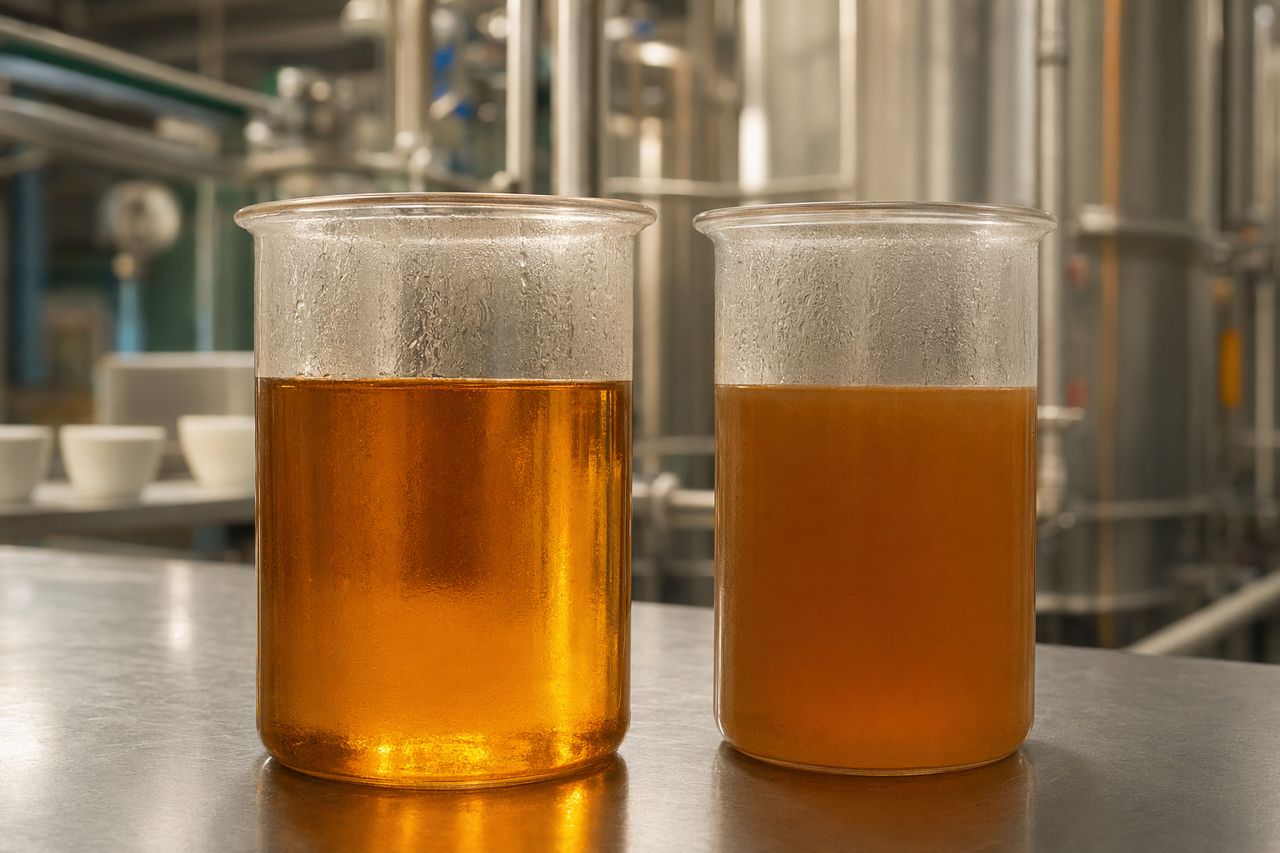
2. Separate hot haze from chill haze
Check clarity at process temperature and after controlled cooling. Hot haze points toward extraction load, fines, or incomplete upstream separation. Chill haze often suggests colloidal instability, polyphenol interactions, mineral effects, or cooling shock.
3. Compare turbidity with yield
A higher extraction yield is only useful if the liquor remains processable. Track yield recovery together with turbidity, filterability, centrifuge load, and finished powder solubility.
4. Review the enzyme window
If enzymes are already used, review whether the application conditions are stable:
- Addition point
- Mixing quality
- Contact time
- Temperature range
- pH range
- Solids loading
- Heat step or separation timing
A good enzyme program is not only a product selection. It is a controlled process step.
Where enzyme treatment can help
For instant tea extraction, enzyme treatment is commonly evaluated to support:
- Improved release of soluble tea solids
- Better clarification behavior
- Lower viscosity contribution from plant polymers
- Reduced filtration pressure rise
- More consistent cold-water solubility
- Lower recycle and rework load
- More repeatable extraction windows across leaf lots
TheaFlux does not start with a generic dose recommendation. We start with your line constraints: extractor configuration, temperature profile, residence time, separation equipment, target °Brix, turbidity specification, and finished powder performance.
That is how an enzyme program becomes operational rather than theoretical.
Practical signs your clarifier is not the root problem
Your clarifier may be doing its job if:
- Feed turbidity is already unstable before clarification
- Clarified liquor clouds again after cooling
- Filterability worsens even when visual clarity looks acceptable
- Turbidity changes track leaf lot changes more than clarifier settings
- Fouling rises after extraction severity increases
- Cold-water solubility failures appear despite acceptable hot liquor clarity
In these cases, the fix is usually upstream control plus an enzyme strategy aligned to the extraction window.
What to prepare before requesting support
To make a technical review faster, gather:
- Leaf type, grade, and cut profile
- Extraction stages and residence time
- Temperature and pH profile
- Target °Brix and current yield recovery
- Turbidity trend by process stage
- Clarifier, filtration, membrane, or centrifuge constraints
- Cooling and holding times
- Finished instant tea solubility target
- Main pain point: yield, haze, filtration, fouling, or consistency
With those details, TheaFlux can recommend an enzyme solution and application window suited to your plant rather than a generic bench assumption.
Move haze control upstream
A clarifier is essential, but it should not be asked to solve every extraction imbalance. Haze control works best when raw material variability, extraction severity, enzyme contact, separation, cooling, and holding are treated as one connected system.
If your plant is fighting turbidity swings, fouling, or cold-water solubility variation, TheaFlux can help review the extraction window and match enzyme treatment to the real bottleneck.
Request a quote to discuss an enzyme solution for your instant tea extraction process.