Designing a Plant Trial for Enzyme-Assisted Tea Extraction
For an instant tea extraction plant, enzyme trials should not be treated as small chemistry experiments. They are production studies. The useful question is not simply whether an enzyme works, but whether it gives your plant a repeatable extraction window: more recoverable solids, cleaner liquor, better cold-water solubility, lower filtration pressure, and fewer fouling events without pushing flavor outside specification.
As an enzyme supplier for tea extraction processing, TheaFlux supports trials around plant-floor realities: leaf variability, extraction trains, residence time, temperature limits, separator capacity, evaporator loading, and the quality checks that decide whether a batch moves forward.
Start with the plant problem, not the enzyme
Before selecting a formulation, define the production constraint you want to relieve.
Common objectives include:
- Increasing extract yield from the same tea input
- Improving liquor clarity before concentration
- Reducing fine solids carryover into clarification or membrane steps
- Improving cold-water solubility of the final instant tea powder
- Reducing extractor, centrifuge, filter, or evaporator fouling
- Stabilizing extraction performance across seasonal leaf variation
- Shortening residence time while holding target soluble solids
A good trial may improve several of these, but the design should still have one primary success measure. If the plant team wants yield recovery and the quality team wants low haze, the protocol must rank those outcomes before the first run.
Build a clean baseline
A plant trial is only useful when the control run is strong. Capture current operating conditions over enough batches to understand normal variation.
Baseline data to record
- Tea type, grade, cut size, origin, and incoming moisture
- Leaf-to-water ratio and extraction stage sequence
- Extraction temperature profile
- Residence time by stage
- Agitation or recirculation conditions
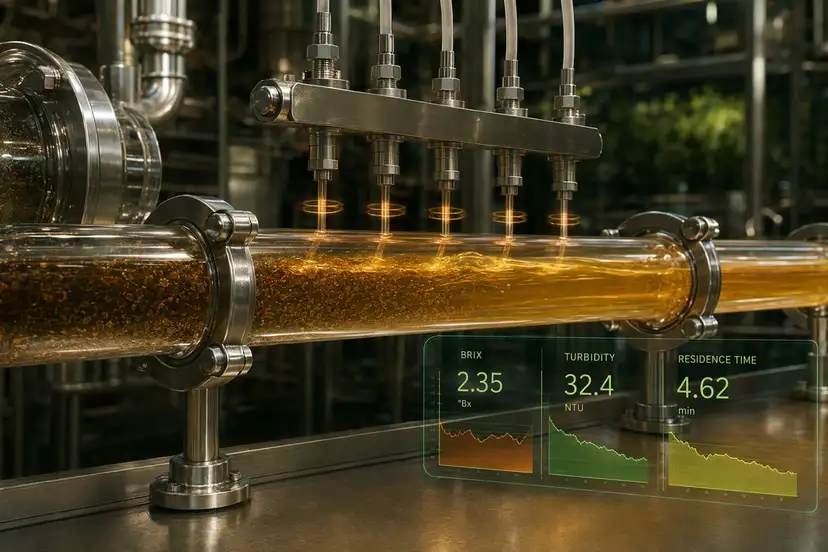
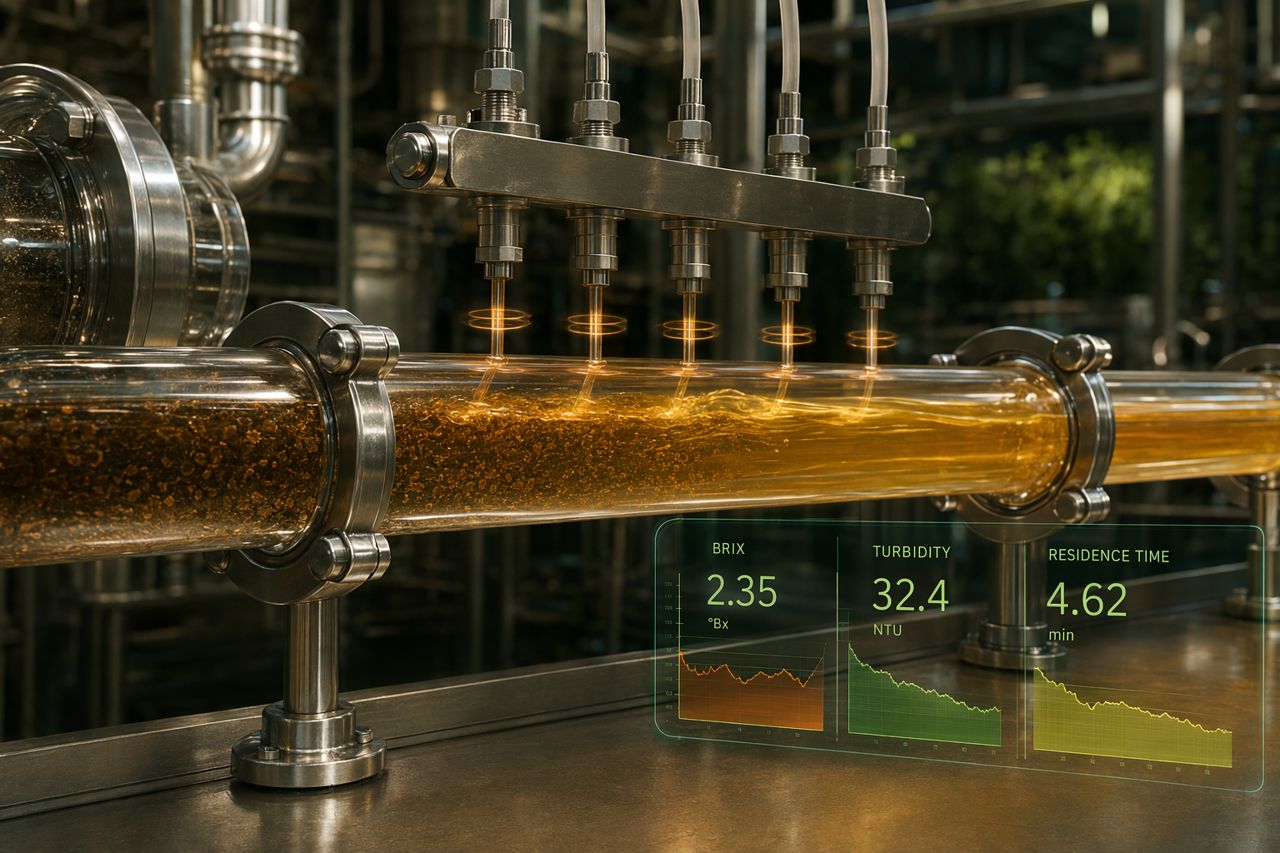
- Liquor °Brix after extraction and after clarification
- Turbidity or haze at defined checkpoints
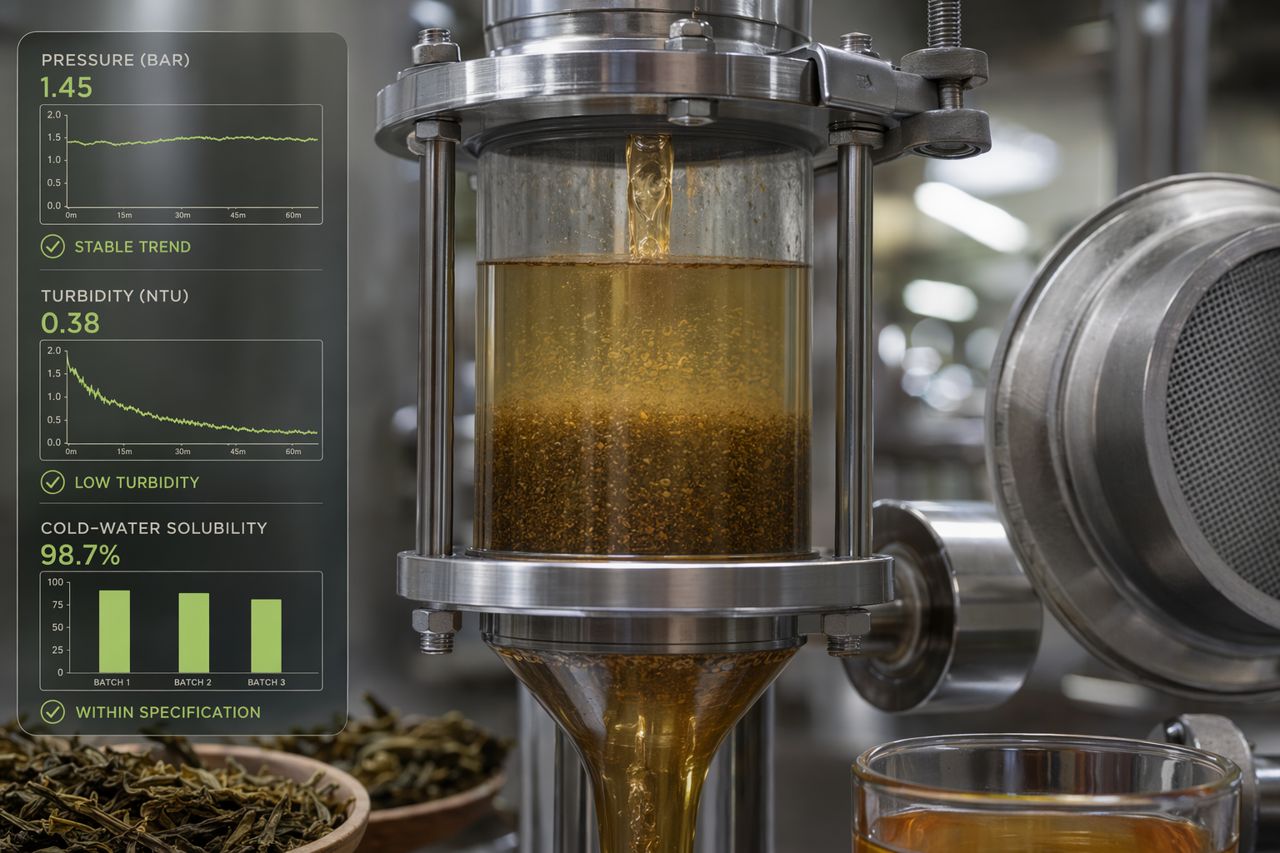
- Filter or membrane pressure trend over time
- Centrifuge load and solids discharge pattern
- Evaporator fouling indicators and cleaning frequency
- Final powder solubility, color, and sensory profile
Do not compare an enzyme-assisted run against a “typical” memory of the line. Compare it against a documented control made with the same tea input, same shift conditions, and the same quality release logic.
Match enzyme function to extraction bottleneck
Tea extraction is a botanical matrix problem. Cell wall materials, pectic substances, hemicellulose, proteins, polyphenol interactions, and fine suspended particles all influence how quickly liquor releases and how cleanly it separates.
A formulation may be built to support:
- Cell wall opening for improved soluble solids release
- Viscosity reduction for easier separation and transfer
- Fine particle management for lower turbidity load
- Haze control for clearer liquor and better cold solubility
- Reduced fouling load in downstream thermal concentration
The best choice depends on the line. A black tea powder plant chasing stronger color may need a different trial design than a green tea extract line where clarity and delicate flavor protection are the limiting factors.
Use a staged trial design
1. Bench confirmation
Use plant tea, plant water, and realistic time-temperature conditions. The bench step should screen whether enzyme-assisted extraction is worth taking to production scale. Keep it practical: target soluble solids, clarity, filtration behavior, color, and sensory direction.
2. Pilot or slipstream run
If your plant has a pilot kettle, side tank, or controlled slipstream, use it to confirm mixing, addition point, hold time, and deactivation strategy. This stage is useful for seeing whether the enzyme effect survives real liquor handling and separation.
3. Full plant trial
Run the enzyme condition against a control condition with a defined batch plan. Use the same tea lot where possible. If continuous extraction is used, allow the system to reach steady state before collecting decision samples.
Structure the trial matrix
Avoid changing too many variables at once. A simple trial matrix is usually stronger than a clever one.
| Trial element |
Practical approach |
| Control |
Current standard process with no enzyme addition |
| Addition point |
Select one point with reliable mixing and known temperature |
| Addition range |
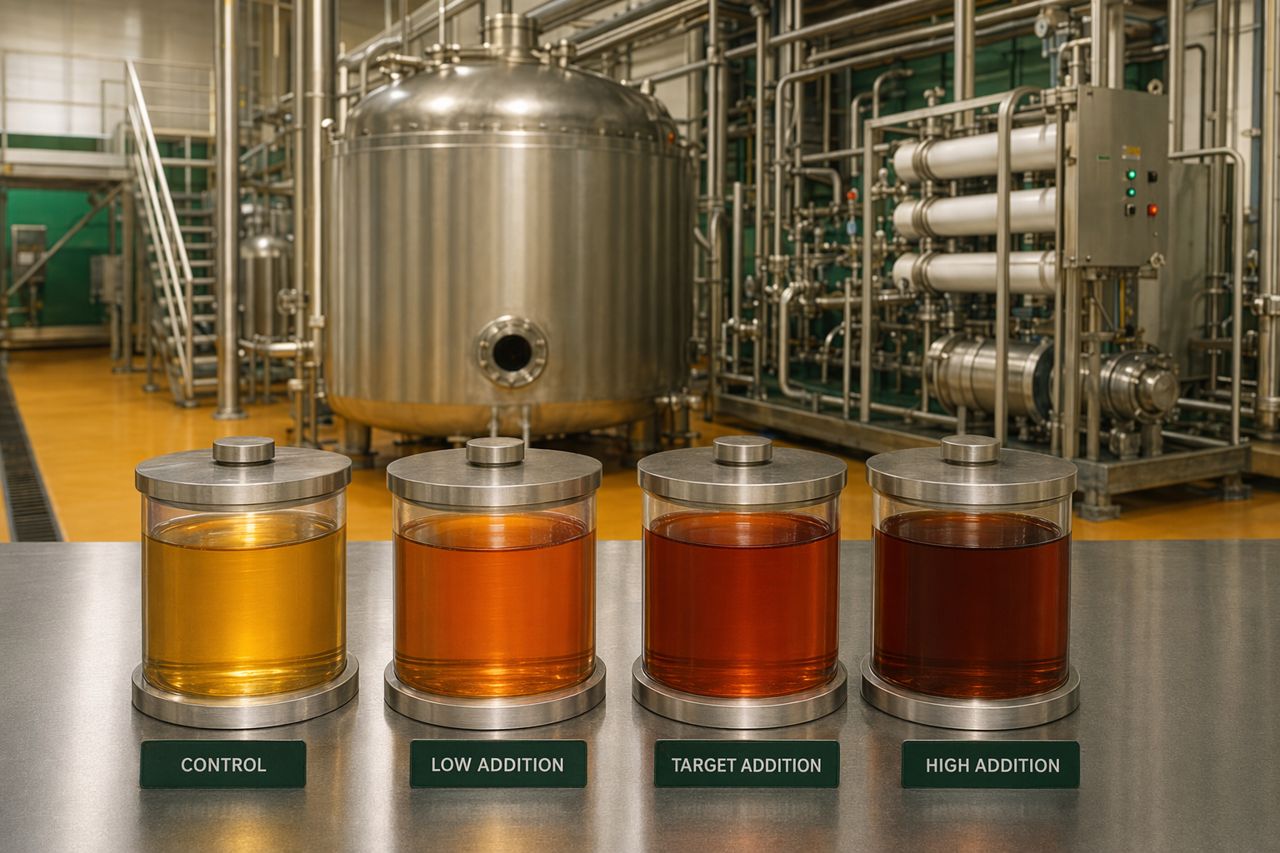
Test a low, target, and high supplier-recommended addition level |
| Contact time |
Compare current residence time with one extended or optimized hold |
| Temperature |
Stay inside the process window that protects tea quality |
| Deactivation |
Confirm the downstream heat step or process condition stops enzyme effect |
| Separation |
Track centrifuge, filter, or membrane response under the same settings |
| Quality release |
Use existing plant criteria for flavor, color, haze, and solubility |
The goal is not to prove every possible setting. The goal is to identify a controlled production window that operators can actually run.
Define success metrics before the run
A strong trial protocol separates primary, secondary, and watch-list metrics.
Primary metrics
Choose one or two:
- Incremental extract yield from the same tea input
- Higher liquor °Brix at the same residence time
- Same °Brix with shorter extraction time
- Lower turbidity before concentration
- Improved cold-water solubility in the final powder
- Lower filtration pressure rise over the batch
Secondary metrics
Track supporting value:
- Reduced sludge or fine solids burden
- More stable separator performance
- Longer run time before cleaning
- Lower evaporator fouling tendency
- More consistent batch-to-batch extraction profile
- Reduced rework linked to haze or poor solubility
Watch-list metrics
Protect the product:
- Astringency and bitterness
- Tea aroma retention
- Color shift
- Sediment formation after cooling
- Over-extraction of unwanted solids
- Impact on downstream concentration and drying behavior
Sampling plan: where to pull data
Take samples at points that explain the process, not just the final product.
Recommended checkpoints:
- Extractor outlet liquor
- Post-hold or pre-separation liquor
- Clarifier, centrifuge, filter, or membrane outlet
- Concentrator feed
- Concentrate before drying
- Finished powder after standard reconstitution
- Cold-water reconstitution after the plant’s normal hold period
Label samples by tea lot, batch, time, temperature, addition condition, and residence time. A sample without process context rarely helps a production decision.
Control the operational variables that can hide the result
Enzyme-assisted extraction can be masked by routine plant variation. Watch these closely:
- Tea leaf variability between control and trial runs
- Inconsistent hydration before enzyme contact
- Poor mixing at the dosing point
- Temperature drift during the hold period
- Residence time variation in continuous systems
- Carryover between control and enzyme runs
- Changes in separator settings during comparison
- Operator adjustments made mid-run without documentation
For a fair trial, operators should know what to hold constant and what they are allowed to adjust.
Translate trial data into plant value
A positive result should be expressed in production language, not lab language.
Useful value statements include:
- Additional extract solids recovered per batch
- Reduced tea input needed for the same finished output
- Fewer clarification interruptions per week
- Longer operating window before cleaning
- Lower reject or rework rate for haze and solubility issues
- More consistent extraction performance across tea lots
- Improved line capacity when extraction or filtration is the bottleneck
This is where procurement, operations, quality, and maintenance can evaluate the same outcome from different angles.
Common trial mistakes
Running too small to see plant behavior
Bench work can show direction, but it cannot fully predict fouling, separator loading, or evaporator behavior.
Measuring only final yield
Yield without clarity, solubility, and sensory protection is not enough for instant tea.
Moving the dosing point during the trial
Changing addition location can change mixing, contact time, and temperature exposure. Lock it unless the protocol says otherwise.
Ignoring cleaning impact
If enzyme-assisted extraction reduces fouling, the value may appear in longer run time, easier cleaning, or steadier heat transfer rather than only in extract yield.
Treating the first result as the final setting
The first successful run identifies a window. The second confirms whether it is repeatable.
What TheaFlux brings to the trial
TheaFlux supports instant tea extraction plants with enzyme solutions selected for botanical extraction, process control, and downstream quality. Our role is to help your team define the trial objective, choose a practical addition strategy, set comparison points, and convert results into a production decision.
We can support discussions around:
- Extraction yield recovery
- Liquor clarification and haze reduction
- Cold-water solubility improvement
- Fouling reduction in filtration and concentration steps
- Process window design for batch or continuous extraction
- Scale-up from bench confirmation to full plant operation
Ready to plan a controlled trial?
If your plant is evaluating enzyme-assisted tea extraction, use the on-site request a quote form to share your tea type, extraction process, current bottleneck, and target outcome. TheaFlux will respond with a practical starting recommendation for your trial design.